Medical PG in Germany
Post-graduation in Germany for Non-EU medical graduates — get your desired specialisation, a monthly stipend up to €6,000, and free training at some of Europe’s top hospitals.
Why Do Medical PG in Germany?
Only 3–3.5% of Non-EU doctors get their desired specialisation back home — in Germany, it’s far easier.
Get your desired medical specialisation (Radiology, Cardiology, Immunology, Neurology & more) at some of the world’s top hospitals.
Earn a monthly stipend of up to €4,500–6,000 during your PG training.
Almost free, high-quality medical education with a rigorous, disciplined curriculum.
Learn German and gain deep, practical exposure to a different healthcare system.
Receive the "Facharzt" qualification at the end of your PG training.
Two extra years to practise in Germany after completing your degree.
Top Universities for Medical PG
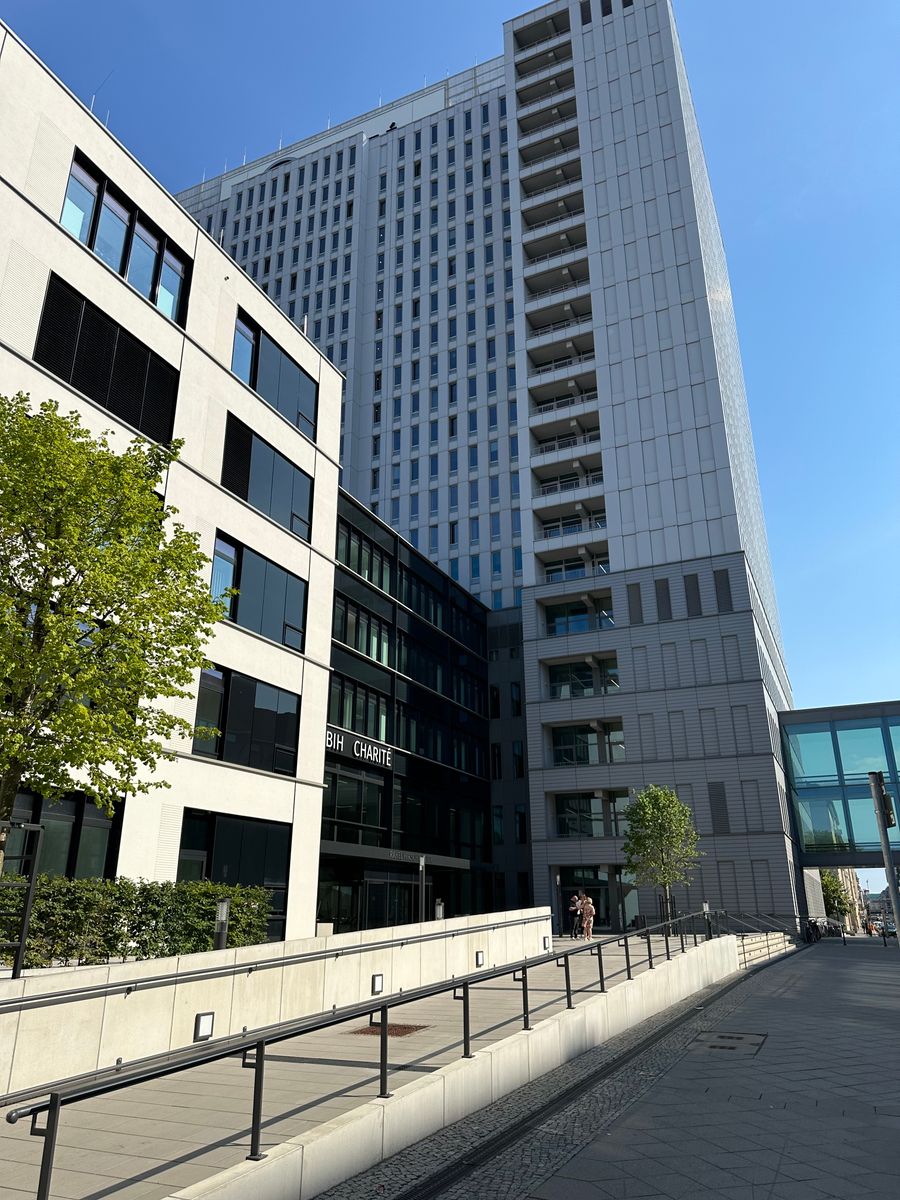
Examples of German university hospitals offering specialist training.
Paid vs Unpaid Hospitation
Two routes to gain clinical experience in Germany before your PG training.
Paid Hospitation
Remuneration of €1,200–1,500/month, free accommodation & food on duty, no blocked account required (a self-funded stay would otherwise need proof of funds – in 2026 usually €11,904 a year), no degree evaluation (DefizitsBescheid) needed, and free FSP exam preparation.
Unpaid Hospitation
No remuneration. Requires proof of funds, usually a blocked account (2026 reference amount €11,904 a year, i.e. €992 a month – confirm the exact sum with the German mission) and a degree evaluation (DefizitsBescheid may be asked). FSP preparation is not free.
Eingangsbestätigung
A notice of arrival requiring only A1-level German — some consulates accept this for the 16b national visa while your DefizitsBescheid is in process.
Admission Process
Reach A1–A2 level German before starting the process.
Get an admission letter for TELC B2 and TELC C1 from a government-approved test centre.
Reach C1-level German (Telc Medizin / medical terminology) before your Approbation exam.
Apply for DefizitsBescheid (degree evaluation) — B2 German required.
Submit documents for verification with the German medical council (Landesärztekammer).
Receive your Approbation licence and begin your Medical PG training.
Medical PG at a Glance
After MBBS, every medical graduate hopes to specialise in their desired field — but back home, only a small percentage get the specialisation they actually want. Germany changes that equation: with an ample number of top medical universities and hospitals, doctors get a genuine shot at their preferred field, whether that’s Radiology, Cardiology, Immunology or Neurology, while earning a stipend and gaining fluency in a new language along the way.
Language is central to this journey. Doctors need to reach at least a B2, and eventually C1 (Telc Medizin) level of German before the Approbation exam — because treating patients safely means truly understanding them. Once qualified, doctors receive the "Facharzt" title at the end of their PG training, along with two additional years to practise in Germany, making it a genuinely long-term, career-building pathway rather than just a study stint.
MD/MS to Facharzt: What “Medical PG in Germany” Actually Means
Unlike India, Germany does not have a separate “PG entrance exam” system. Postgraduate medical specialisation happens through Weiterbildung – structured, paid, on-the-job specialist training (Assistenzarzt) inside a hospital department, supervised by a Facharzt (specialist) trainer, lasting 5-6 years depending on the specialty. To start Weiterbildung, your existing MBBS/MD degree first needs Anerkennung (recognition) and, for non-EU graduates, the Approbation licensing process – which for doctors trained outside the EU generally requires passing the Kenntnispruefung (a medical knowledge exam) and the Fachsprachpruefung (a medical-German communication exam).
The practical sequence for an Indian MBBS/MD graduate is: German language to B2/C1, document recognition and Approbation application, Kenntnispruefung and Fachsprachpruefung, then apply directly to hospital departments for an Assistenzarzt training post in your chosen specialty. Unlike a university postgraduate degree, you are a paid hospital employee from day one of Weiterbildung, not a fee-paying student.
What This Pathway Costs – and Pays
Kenntnispruefung and Fachsprachpruefung, Explained
The Fachsprachpruefung (FSP) tests whether you can communicate with patients and colleagues in medical German – a simulated patient consultation, a case write-up, and a colleague handover, all in German. It is required for every non-EU doctor regardless of how strong your medical knowledge is. The Kenntnispruefung (KP) is only required if the licensing authority finds a “substantial difference” between your Indian training and the German medical curriculum (a Defizitbescheid) – it’s an oral-practical exam covering internal medicine, surgery, and emergency care.
Both exams are demanding but predictable with proper preparation – the FSP in particular has a well-documented format, and structured preparation courses exist in most major German cities.

Documents for Approbation and Weiterbildung
MBBS/MD/MS degree certificates and transcripts, attested and translated, submitted to the state medical licensing authority.
Internship completion certificate and any post-graduate training records from India.
Good standing certificate from the Medical Council of India / your state medical council.
Fachsprachpruefung and (if required) Kenntnispruefung results – obtained after arrival and language preparation.
Passport, health certificate, and proof of clean criminal record.
Specialties With Strong Demand for International Doctors
How We Help You Prepare for the FSP and KP
The Fachsprachpruefung fails more otherwise-qualified doctors than the medical knowledge exam does – not because their medicine is weak, but because simulating a natural patient conversation under exam pressure, in German, is a different skill from clinical fluency. We guide candidates through structured mock consultations, case-presentation practice, and colleague-handover drills modelled on the real exam format, alongside connecting you with medical-German tutors experienced specifically with the FSP (not general language teachers). For candidates who receive a Defizitbescheid requiring the Kenntnispruefung, we help you understand exactly which knowledge gaps the assessor identified so your preparation targets the real requirement, not a generic revision of everything you already know.
What Life Looks Like as an Assistenzarzt
As an Assistenzarzt, you are a full hospital employee from your first day – with standard German employment protections, statutory health insurance through your employer, and a salary that supports independent living without relying on savings or family support. Working hours are regulated (typically 42 hours/week under collective agreements, with duty/on-call supplements paid separately), and most hospitals provide structured supervision and teaching sessions specifically for Weiterbildung trainees, distinct from the general clinical workload.
Many international doctors report that the biggest adjustment isn’t the medicine itself but the directness of German clinical communication style and hospital hierarchy, which is generally flatter and more collegial than in Indian hospital settings – something our preparation guidance covers alongside the purely exam-focused parts of the process.
Life After You Qualify as a Facharzt
University Hospitals vs. Regional Hospitals for Weiterbildung
University hospitals (Universitaetsklinikum) offer the widest range of subspecialties and research opportunities but are also the most competitive for international doctors to secure an Assistenzarzt post at. Regional and municipal hospitals (Kreiskrankenhaus, staedtisches Klinikum), especially in less densely populated states, often have more urgent staffing needs and are genuinely more open to international applicants – and the clinical training itself is not meaningfully weaker, since Weiterbildung curricula are standardised nationally regardless of hospital size. For many of our candidates, a regional hospital placement is the faster, more realistic route into paid specialist training, with the option to move to a university hospital later once you’re a recognised Facharzt.
Bringing Your Family and Planning Long-Term
Building Medical German Before You Sit the FSP
General B2 German and medical German are not the same skill, and doctors who only study general language courses are often blindsided by the Fachsprachpruefung’s clinical vocabulary and consultation structure. We recommend layering in medical-German specific preparation (Medizindeutsch courses, many offered specifically for foreign-trained doctors) once your general German reaches B1/B2, focusing on patient history-taking phrases, anatomical and pharmacological vocabulary, and the standard German clinical documentation format – all of which differ meaningfully from the general-purpose German taught in standard integration courses.
Explore More
Ready to start your Medical PG journey?
Talk to our counsellors and get a free personalised roadmap for Medical PG admission in Germany.
Get Free Guidance Now →
Career Path After Medical PG in Germany
Completing postgraduate medical training (Facharztausbildung) in Germany qualifies you as a specialist, one of the most respected and well-compensated medical career paths in Europe. Specialist salaries in German hospitals commonly range from €70,000–€100,000+ a year depending on specialty, seniority and whether you work in a public or private hospital.

Key Facts About Medical pg study
Common Mistakes to Avoid
Frequently Asked Questions
Yes, your qualification is formally assessed (Anerkennung) before you begin postgraduate training.
Typically 5–6 years of specialist training after Approbation, depending on your chosen specialty.
Largely yes, though placement availability varies by specialty and region — we help you target realistic openings.
No – postgraduate specialisation (Weiterbildung) happens inside a hospital department as paid employment, not through a university admission process. You apply directly to hospitals once you hold your Approbation or a temporary work permit.
Most candidates need 12-24 months from starting German language study to beginning paid Assistenzarzt work, depending on language intensity and exam scheduling availability.
No automatic recognition exists for non-EU degrees. Every non-EU doctor goes through individual document assessment, and most receive a Defizitbescheid requiring the Kenntnispruefung alongside the mandatory Fachsprachpruefung.
You apply directly to hospital departments in your chosen specialty, and availability depends on demand – specialties facing shortages (like anaesthesiology, internal medicine and general/family medicine) generally have more open Assistenzarzt positions for international doctors.
Yes – a temporary permit to practise (Berufserlaubnis) is commonly granted after passing the FSP, allowing supervised work while your full Approbation application completes.
Sometimes partially, depending on the specialty and how closely your Indian PG training matches the German curriculum – this is assessed case by case by the licensing authority and the hospital training programme, not automatically credited.
Standard contracts are around 42 hours/week under German hospital collective agreements, with on-call and duty shifts compensated separately according to regulated overtime rules.
Generally yes – regional and municipal hospitals often have more urgent staffing needs and are more open to international applicants than the most competitive university hospitals, while following the same standardised national Weiterbildung curriculum.
Not usually on its own – the FSP tests medical-specific vocabulary and consultation structure, so dedicated Medizindeutsch preparation on top of general B2/C1 German significantly improves pass rates.
Guides on This Topic
Detailed answers to the questions applicants usually ask next.
Get in Touch with AdmissionGermany
Book a free consultation with our counsellors and get a personalised roadmap for your Medical PG admission — no obligation, no hidden fees.
Request Free Guidance
Fill in your details and our team will reach out to you shortly.
By submitting, you agree to be contacted by our counselling team.