Study Physiotherapy in Europe in English: Fees and Career Scope
Complete Guide for International Students (SEO Optimized)
Study Physiotherapy in Europe in English
Physiotherapy is one of the fastest-growing healthcare professions in the world. With rising awareness about physical fitness, rehabilitation, and injury prevention, the demand for skilled physiotherapists is increasing every year. Many international students, especially from Asia and Africa, are now choosing Europe as their study destination for physiotherapy.
Europe offers high-quality education, internationally recognized degrees, modern medical infrastructure, and affordable tuition fees compared to countries like the USA, UK, and Australia. Another major advantage is that many European universities offer physiotherapy programs completely in English.
This complete guide will help you understand everything about studying physiotherapy in Europe in English, including eligibility, fees, top countries, admission process, career scope, salary, and future opportunities.
What is Physiotherapy?
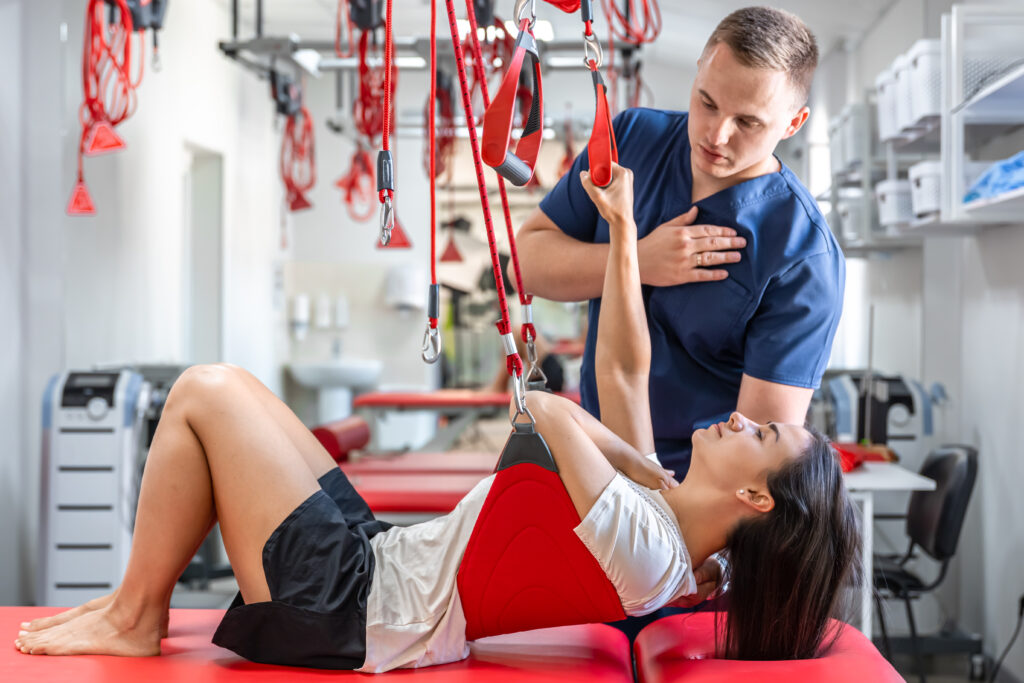
Physiotherapy is a healthcare profession focused on improving movement, physical function, and quality of life. Physiotherapists treat patients with injuries, disabilities, chronic illnesses, neurological disorders, and post-surgery conditions.
They use techniques such as:
- Exercise therapy
- Manual therapy
- Electrotherapy
- Rehabilitation programs
- Pain management techniques
- Posture correction
- Sports injury treatment
Physiotherapists work closely with doctors, nurses, and other healthcare professionals.
Why Study Physiotherapy in Europe?
Studying physiotherapy in Europe has many advantages for international students.
1. High-Quality Education
European universities follow international standards and offer evidence-based medical education. Most institutions are accredited and recognized globally.
2. English-Taught Programs
Many universities offer full physiotherapy programs in English, especially in countries like Germany, Poland, Hungary, Lithuania, Latvia, Spain, and Romania.
3. Affordable Tuition Fees
Compared to Western countries, European fees are much lower. Some countries even offer free or low-cost education.
4. Practical Training
European universities focus strongly on clinical practice and internships in hospitals, rehabilitation centers, and sports clinics.
5. International Recognition
European degrees are accepted in many countries worldwide, making it easier to work abroad.
6. Cultural Exposure
Students experience multicultural environments, modern lifestyle, and rich European culture.
Types of Physiotherapy Degrees in Europe
1. Bachelor’s Degree in Physiotherapy
- Duration: 3 to 4 years
- Level: Undergraduate
- Focus: Basic medical sciences, rehabilitation, clinical practice
2. Master’s Degree in Physiotherapy
- Duration: 1.5 to 2 years
- Level: Postgraduate
- Focus: Advanced clinical skills, research, specialization
3. PhD in Physiotherapy
- Duration: 3 to 5 years
- Level: Doctoral
- Focus: Research and academic career
Top European Countries to Study Physiotherapy in English
1. Germany
Germany is one of the most popular destinations for healthcare studies.
Advantages:
- Low or zero tuition fees
- High-quality medical education
- Strong healthcare system
Fees: €0 – €3,000 per year
Note: Some programs may require German language for clinical practice.
2. Poland
Poland is known for affordable education and English-taught medical programs.
Advantages:
- Low living cost
- Modern universities
- Easy admission process
Fees: €3,000 – €6,000 per year
3. Hungary
Hungary offers high-standard medical education with English programs.
Advantages:
- EU-recognized degrees
- Good clinical exposure
Fees: €4,000 – €7,000 per year
4. Lithuania
Lithuania is becoming popular for healthcare education.
Advantages:
- English-medium courses
- Affordable fees
- EU recognition
Fees: €3,000 – €5,000 per year
5. Latvia
Latvia offers modern education facilities and English programs.
Fees: €3,500 – €6,000 per year
6. Romania
Romania provides low-cost medical education.
Fees: €2,500 – €5,000 per year
7. Spain
Spain is famous for sports and rehabilitation studies.
Fees: €4,000 – €8,000 per year
Eligibility Criteria
For Bachelor’s Degree
- 12th grade with Physics, Chemistry, and Biology
- Minimum 50% marks (varies by university)
- English proficiency (IELTS/TOEFL may be required)
- Valid passport
For Master’s Degree
- Bachelor’s in Physiotherapy or related field
- Academic transcripts
- English proficiency
- Recommendation letters (sometimes)
English Language Requirements
Most universities accept:
- IELTS: 5.5 – 6.5
- TOEFL: 70 – 90
- PTE: 50 – 60
Some universities also accept medium-of-instruction certificates.
Admission Process Step by Step
Step 1: Choose Country and University
Research universities offering English-taught physiotherapy programs.
Step 2: Check Eligibility
Match academic and language requirements.
Step 3: Prepare Documents
- Academic certificates
- Passport
- Resume
- Statement of purpose
- Language certificate
- Photographs
Step 4: Apply Online
Submit application through university portal or representative.
Step 5: Receive Offer Letter
After evaluation, you will get a conditional or unconditional offer.
Step 6: Pay Tuition Deposit
Some universities require advance payment.
Step 7: Apply for Student Visa
Apply at the embassy with offer letter and financial documents.
Step 8: Travel and Enroll
Arrive in Europe and complete registration.
Tuition Fees in Europe
| Country | Annual Fees (Approx.) |
|---|---|
| Germany | €0 – €3,000 |
| Poland | €3,000 – €6,000 |
| Hungary | €4,000 – €7,000 |
| Lithuania | €3,000 – €5,000 |
| Latvia | €3,500 – €6,000 |
| Romania | €2,500 – €5,000 |
| Spain | €4,000 – €8,000 |
Cost of Living in Europe
Average monthly expenses:
- Accommodation: €200 – €500
- Food: €150 – €300
- Transport: €30 – €70
- Insurance: €30 – €60
- Miscellaneous: €50 – €100
Total: €500 – €900 per month
Scholarships for Physiotherapy Students
Many European universities and governments offer scholarships.
Types:
- Merit-based scholarships
- Need-based scholarships
- Country-specific scholarships
- University grants
These can reduce tuition and living costs.
Clinical Training and Internship
Practical training is a compulsory part of physiotherapy education.
Students get exposure in:
- Government hospitals
- Private clinics
- Rehabilitation centers
- Sports institutes
- Elderly care homes
This helps students gain real-world experience.
Career Scope After Physiotherapy in Europe
Physiotherapy offers excellent career opportunities worldwide.
1. Clinical Physiotherapist
Work in hospitals, clinics, and rehab centers.
2. Sports Physiotherapist
Work with athletes, clubs, and sports academies.
3. Neurological Physiotherapist
Treat stroke, paralysis, and brain injury patients.
4. Pediatric Physiotherapist
Work with children having developmental disorders.
5. Geriatric Physiotherapist
Treat elderly patients.
6. Academic and Researcher
Teach in universities or work in research.
7. Private Practice
Open your own clinic.
Salary After Physiotherapy in Europe
Average monthly salary:
| Country | Salary Range |
|---|---|
| Germany | €2,500 – €4,000 |
| Poland | €1,500 – €2,500 |
| Hungary | €1,200 – €2,000 |
| Spain | €2,000 – €3,500 |
| Romania | €1,000 – €1,800 |
Salary increases with experience and specialization.
Working While Studying
International students can work part-time.
- 15 – 20 hours per week
- On-campus and off-campus jobs
- Helps manage living expenses
Post-Study Work Opportunities
Many European countries allow graduates to stay and work after studies.
Duration: 6 months to 2 years (depends on country)
Graduates can apply for work permits and residence.
License and Registration
To work as a physiotherapist, you may need:
- Professional registration
- Language certification
- Local license exam (in some countries)
Requirements vary by country.
Advantages and Disadvantages
Advantages
- International degree
- Affordable fees
- High employability
- Global career
- Quality education
Disadvantages
- Language barriers in clinics
- Cultural adjustment
- License procedures
- Cold weather in some countries
Tips for Successful Admission
- Apply early
- Prepare strong SOP
- Improve English skills
- Choose accredited universities
- Maintain good academic records
- Arrange finances in advance
Future Scope of Physiotherapy
With increasing lifestyle diseases and aging population, physiotherapy demand will grow rapidly.
Future trends:
- Digital physiotherapy
- Tele-rehabilitation
- Sports science integration
- Advanced rehabilitation technology
- Robotics-assisted therapy
Physiotherapy will remain a stable and rewarding profession.
Frequently Asked Questions (FAQs)
Is physiotherapy in Europe taught in English?
Yes, many universities offer full English programs.
Can I work in my home country after studying in Europe?
Yes, after license and registration.
Is NEET required?
Generally no, but some universities may ask.
Can I get PR after studies?
Yes, after working for some years.
Is physiotherapy a good career?
Yes, it offers job security and growth.
Conclusion
Studying physiotherapy in Europe in English is an excellent opportunity for international students who want quality education, global exposure, and strong career prospects. With affordable fees, modern infrastructure, and international recognition, Europe has become a top destination for physiotherapy aspirants.
By choosing the right university, preparing documents properly, and focusing on skill development, students can build a successful career in physiotherapy both in Europe and worldwide.
If you are passionate about healthcare, rehabilitation, and helping people live healthier lives, physiotherapy in Europe can be the perfect choice for your future.Study Physiotherapy in Europe in English: Fees and Career Scope
Complete Guide for International Students (SEO Optimized)
Introduction
Physiotherapy is one of the fastest-growing healthcare professions in the world. With rising awareness about physical fitness, rehabilitation, and injury prevention, the demand for skilled physiotherapists is increasing every year. Many international students, especially from Asia and Africa, are now choosing Europe as their study destination for physiotherapy.
Europe offers high-quality education, internationally recognized degrees, modern medical infrastructure, and affordable tuition fees compared to countries like the USA, UK, and Australia. Another major advantage is that many European universities offer physiotherapy programs completely in English.
This complete guide will help you understand everything about studying physiotherapy in Europe in English, including eligibility, fees, top countries, admission process, career scope, salary, and future opportunities.
What is Physiotherapy?
Physiotherapy is a healthcare profession focused on improving movement, physical function, and quality of life. Physiotherapists treat patients with injuries, disabilities, chronic illnesses, neurological disorders, and post-surgery conditions.
They use techniques such as:
- Exercise therapy
- Manual therapy
- Electrotherapy
- Rehabilitation programs
- Pain management techniques
- Posture correction
- Sports injury treatment
Physiotherapists work closely with doctors, nurses, and other healthcare professionals.
Why Study Physiotherapy in Europe?
Studying physiotherapy in Europe has many advantages for international students.
1. High-Quality Education
European universities follow international standards and offer evidence-based medical education. Most institutions are accredited and recognized globally.
2. English-Taught Programs
Many universities offer full physiotherapy programs in English, especially in countries like Germany, Poland, Hungary, Lithuania, Latvia, Spain, and Romania.
3. Affordable Tuition Fees
Compared to Western countries, European fees are much lower. Some countries even offer free or low-cost education.
4. Practical Training
European universities focus strongly on clinical practice and internships in hospitals, rehabilitation centers, and sports clinics.
5. International Recognition
European degrees are accepted in many countries worldwide, making it easier to work abroad.
6. Cultural Exposure
Students experience multicultural environments, modern lifestyle, and rich European culture.
Types of Physiotherapy Degrees in Europe
1. Bachelor’s Degree in Physiotherapy
- Duration: 3 to 4 years
- Level: Undergraduate
- Focus: Basic medical sciences, rehabilitation, clinical practice
2. Master’s Degree in Physiotherapy
- Duration: 1.5 to 2 years
- Level: Postgraduate
- Focus: Advanced clinical skills, research, specialization
3. PhD in Physiotherapy
- Duration: 3 to 5 years
- Level: Doctoral
- Focus: Research and academic career
Top European Countries to Study Physiotherapy in English
1. Germany
Germany is one of the most popular destinations for healthcare studies.
Advantages:
- Low or zero tuition fees
- High-quality medical education
- Strong healthcare system
Fees: €0 – €3,000 per year
Note: Some programs may require German language for clinical practice.
2. Poland
Poland is known for affordable education and English-taught medical programs.
Advantages:
- Low living cost
- Modern universities
- Easy admission process
Fees: €3,000 – €6,000 per year
3. Hungary
Hungary offers high-standard medical education with English programs.
Advantages:
- EU-recognized degrees
- Good clinical exposure
Fees: €4,000 – €7,000 per year

4. Lithuania
Lithuania is becoming popular for healthcare education.
Advantages:
- English-medium courses
- Affordable fees
- EU recognition
Fees: €3,000 – €5,000 per year
5. Latvia
Latvia offers modern education facilities and English programs.
Fees: €3,500 – €6,000 per year
6. Romania
Romania provides low-cost medical education.
Fees: €2,500 – €5,000 per year
7. Spain
Spain is famous for sports and rehabilitation studies.
Fees: €4,000 – €8,000 per year
Eligibility Criteria
For Bachelor’s Degree
- 12th grade with Physics, Chemistry, and Biology
- Minimum 50% marks (varies by university)
- English proficiency (IELTS/TOEFL may be required)
- Valid passport
For Master’s Degree
- Bachelor’s in Physiotherapy or related field
- Academic transcripts
- English proficiency
- Recommendation letters (sometimes)
English Language Requirements
Most universities accept:
- IELTS: 5.5 – 6.5
- TOEFL: 70 – 90
- PTE: 50 – 60
Some universities also accept medium-of-instruction certificates.
Admission Process Step by Step
Step 1: Choose Country and University
Research universities offering English-taught physiotherapy programs.
Step 2: Check Eligibility
Match academic and language requirements.
Step 3: Prepare Documents
- Academic certificates
- Passport
- Resume
- Statement of purpose
- Language certificate
- Photographs
Step 4: Apply Online
Submit application through university portal or representative.
Step 5: Receive Offer Letter
After evaluation, you will get a conditional or unconditional offer.
Step 6: Pay Tuition Deposit
Some universities require advance payment.
Step 7: Apply for Student Visa
Apply at the embassy with offer letter and financial documents.
Step 8: Travel and Enroll
Arrive in Europe and complete registration.
Tuition Fees in Europe
| Country | Annual Fees (Approx.) |
|---|---|
| Germany | €0 – €3,000 |
| Poland | €3,000 – €6,000 |
| Hungary | €4,000 – €7,000 |
| Lithuania | €3,000 – €5,000 |
| Latvia | €3,500 – €6,000 |
| Romania | €2,500 – €5,000 |
| Spain | €4,000 – €8,000 |
Cost of Living in Europe
Average monthly expenses:
- Accommodation: €200 – €500
- Food: €150 – €300
- Transport: €30 – €70
- Insurance: €30 – €60
- Miscellaneous: €50 – €100
Total: €500 – €900 per month
Scholarships for Physiotherapy Students
Many European universities and governments offer scholarships.
Types:
- Merit-based scholarships
- Need-based scholarships
- Country-specific scholarships
- University grants
These can reduce tuition and living costs.
Clinical Training and Internship
Practical training is a compulsory part of physiotherapy education.
Students get exposure in:
- Government hospitals
- Private clinics
- Rehabilitation centers
- Sports institutes
- Elderly care homes
This helps students gain real-world experience.
Career Scope After Physiotherapy in Europe
Physiotherapy offers excellent career opportunities worldwide.
1. Clinical Physiotherapist
Work in hospitals, clinics, and rehab centers.
2. Sports Physiotherapist
Work with athletes, clubs, and sports academies.
3. Neurological Physiotherapist
Treat stroke, paralysis, and brain injury patients.
4. Pediatric Physiotherapist
Work with children having developmental disorders.
5. Geriatric Physiotherapist
Treat elderly patients.
6. Academic and Researcher
Teach in universities or work in research.
7. Private Practice
Open your own clinic.
Salary After Physiotherapy in Europe
Average monthly salary:
| Country | Salary Range |
|---|---|
| Germany | €2,500 – €4,000 |
| Poland | €1,500 – €2,500 |
| Hungary | €1,200 – €2,000 |
| Spain | €2,000 – €3,500 |
| Romania | €1,000 – €1,800 |
Salary increases with experience and specialization.
Working While Studying
International students can work part-time.
- 15 – 20 hours per week
- On-campus and off-campus jobs
- Helps manage living expenses
Post-Study Work Opportunities
Many European countries allow graduates to stay and work after studies.
Duration: 6 months to 2 years (depends on country)
Graduates can apply for work permits and residence.
License and Registration
To work as a physiotherapist, you may need:
- Professional registration
- Language certification
- Local license exam (in some countries)
Requirements vary by country.
Advantages and Disadvantages
Advantages
- International degree
- Affordable fees
- High employability
- Global career
- Quality education
Disadvantages
- Language barriers in clinics
- Cultural adjustment
- License procedures
- Cold weather in some countries
Tips for Successful Admission
- Apply early
- Prepare strong SOP
- Improve English skills
- Choose accredited universities
- Maintain good academic records
- Arrange finances in advance
Future Scope of Physiotherapy
With increasing lifestyle diseases and aging population, physiotherapy demand will grow rapidly.
Future trends:
- Digital physiotherapy
- Tele-rehabilitation
- Sports science integration
- Advanced rehabilitation technology
- Robotics-assisted therapy
Physiotherapy will remain a stable and rewarding profession.
Frequently Asked Questions (FAQs)
Is physiotherapy in Europe taught in English?
Yes, many universities offer full English programs.
Can I work in my home country after studying in Europe?
Yes, after license and registration.
Is NEET required?
Generally no, but some universities may ask.
Can I get PR after studies?
Yes, after working for some years.
Is physiotherapy a good career?
Yes, it offers job security and growth.
Conclusion
Studying physiotherapy in Europe in English is an excellent opportunity for international students who want quality education, global exposure, and strong career prospects. With affordable fees, modern infrastructure, and international recognition, Europe has become a top destination for physiotherapy aspirants.
By choosing the right university, preparing documents properly, and focusing on skill development, students can build a successful career in physiotherapy both in Europe and worldwide.
If you are passionate about healthcare, rehabilitation, and helping people live healthier lives, physiotherapy in Europe can be the perfect choice for your future.visit the Federal Employment Agency’s Ausbildung Portal or the Make It In Germany website.