
Caregiver (Altenpflege) Ausbildung in Germany
Germany’s ageing population has created one of the country’s most acute, consistently sponsored labour shortages – elder care. Here is exactly how the paid Altenpflege Ausbildung route works for Indian candidates, from eligibility through to real career growth.
Germany’s population is ageing faster than its workforce can keep up with elder care demand – official projections put the shortfall at roughly 500,000 additional caregivers needed by 2030. That shortage translates directly into paid training places, structured visa pathways, and consistently strong sponsorship for international candidates willing to train as caregivers, distinct from this site’s existing general nursing guide, which covers hospital-track nursing rather than elder-care specifically.
This guide covers the Altenpflege (elder care) Ausbildung specifically – what the job actually involves day to day, the real eligibility requirements, exactly how much you earn during and after training, the full application process, and an honest look at the parts of this work that recruitment ads tend to gloss over.
It is written for candidates genuinely weighing whether hands-on elder-care work is right for them, not just chasing the salary figures – if hospital-based clinical nursing suits you better than personal elder care, our general nursing guide covers that closely related but distinct route in full.
What Altenpflege Ausbildung Actually Is
A paid, 3-year dual training programme combining practical work in a care home or facility with theory classes at a nursing school.
Since Germany’s 2020 nursing reform, most vocational caregiver training runs through the generalist Pflegefachmann/Pflegefachfrau qualification, with a dedicated elder-care specialisation track available in the final training year – meaning Altenpflege as a career focus is very much alive, just delivered through a training structure that keeps career doors open across hospital, elder-care and community-care settings rather than locking you into one from day one.
Training follows a roughly 70 percent practical, 30 percent classroom-theory split, with practical placements rotating through elder-care facilities, hospitals and outpatient care settings – genuinely hands-on from very early in the programme, not years of classroom study before real patient contact.
Two Entry Routes: 1-Year Assistant vs 3-Year Specialist
A shorter care-assistant route exists alongside the full specialist qualification – each suits a different starting point.
Candidates with only a Class 10 pass, or who want to start earning and gain German work experience faster, often choose the 1-year assistant route first, then progress into the full 3-year specialist programme afterward with relevant experience already behind them – a genuinely realistic stepping-stone path rather than a dead end.
Who Can Apply: Eligibility Requirements
Academic, language and age requirements are more accessible than most university study routes to Germany.
Class 10 pass (assistant route) or Class 12 pass (specialist route) from a recognised board
German language proficiency at B1 minimum, B2 preferred for the specialist track
Typically aged 18-32, though some training providers accept older candidates on a case-by-case basis
Basic medical fitness certificate confirming ability to perform physically active care work
Genuine interest in and comfort with hands-on, personal elder care work – covered honestly below

Salary During Training
This is genuinely paid training from day one, not unpaid study – a major practical advantage over the university route.
Public-sector and larger care-home employers generally pay toward the higher end of these ranges under collectively agreed pay scales (TVAoeD Pflege and similar), and stipends rise automatically each training year regardless of employer, giving a predictable, steadily increasing income throughout the full three years rather than a flat training wage.
Salary and Career Growth After Qualification
Pay rises meaningfully once training ends, with a genuine, structured progression ladder into supervisory roles.
This progression ladder is genuinely accessible with experience and further short courses rather than requiring an entirely separate degree – a caregiver who qualifies, works a few years, and pursues a supervisory qualification course can realistically reach management-track pay within 5-8 years, which is a meaningfully faster ladder than many comparable career paths.
Step-by-Step: How to Actually Apply
Six stages from language study to your first day of paid training in Germany.
Build your German to B1 (B2 for the specialist track)
This is genuinely the longest single component of the whole process – start well before contacting any training provider or recruitment agency.
Choose between the assistant and specialist entry route
Base this on your Class 10/12 status and how quickly you want to start earning, using the comparison table above.
Apply to a recognised Altenpflegeschule or through a structured recruitment partner
Verify any recruitment agency’s legitimacy carefully before paying anything – see the cost/fraud warning below.
Secure your training contract
A signed Ausbildungsvertrag with a specific care facility or training school is required before the visa stage.
Apply for the Ausbildungsvisum (Section 16a residence permit)
This is Germany’s dedicated vocational-training visa category, distinct from a student or work visa.
Travel, register, and begin paid training
Complete Anmeldung (address registration) and start your training contract, drawing your monthly stipend from day one.
What the Job Actually Involves – An Honest Look
Genuinely meaningful, in-demand work, but physically and emotionally demanding in ways recruitment ads often understate.
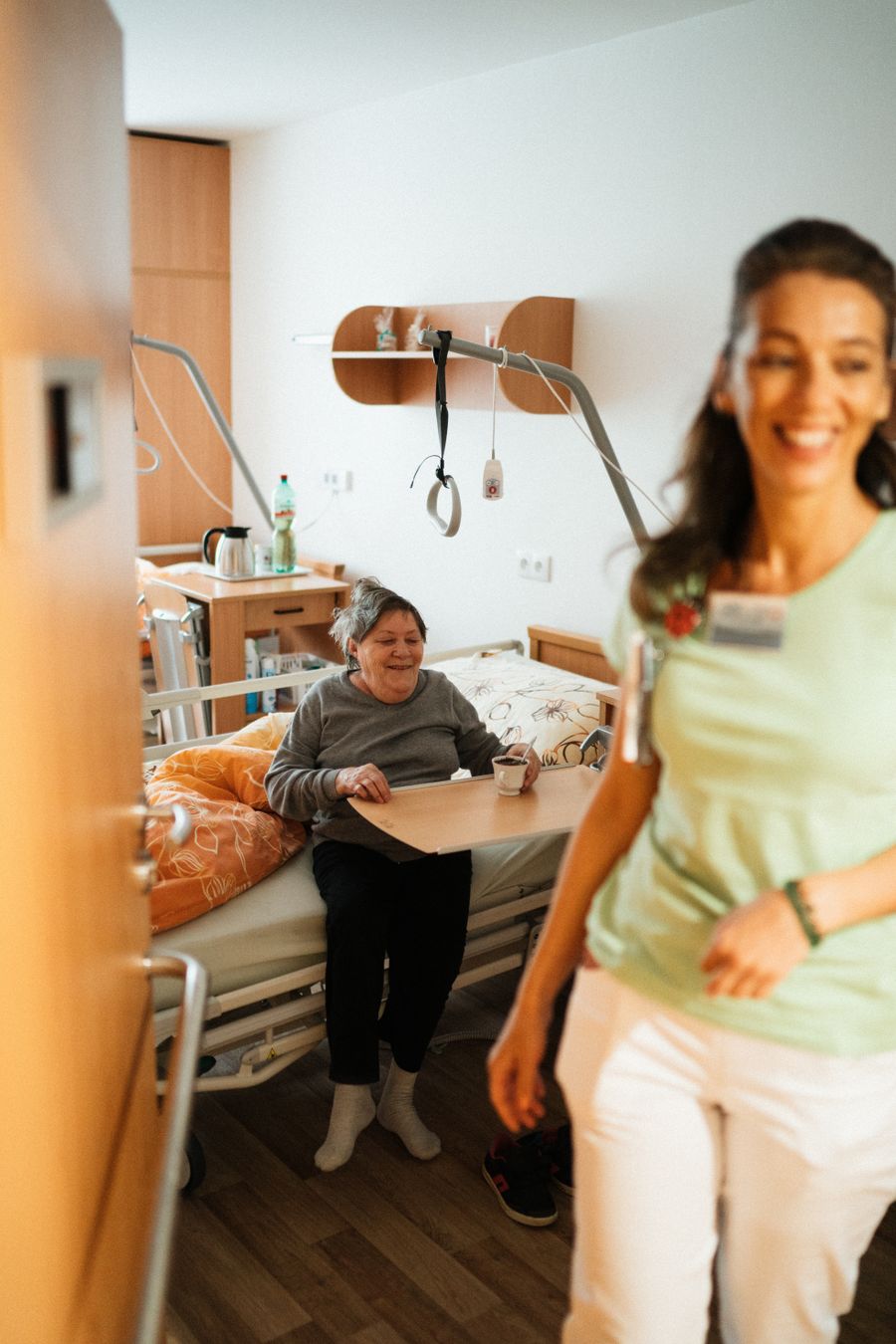
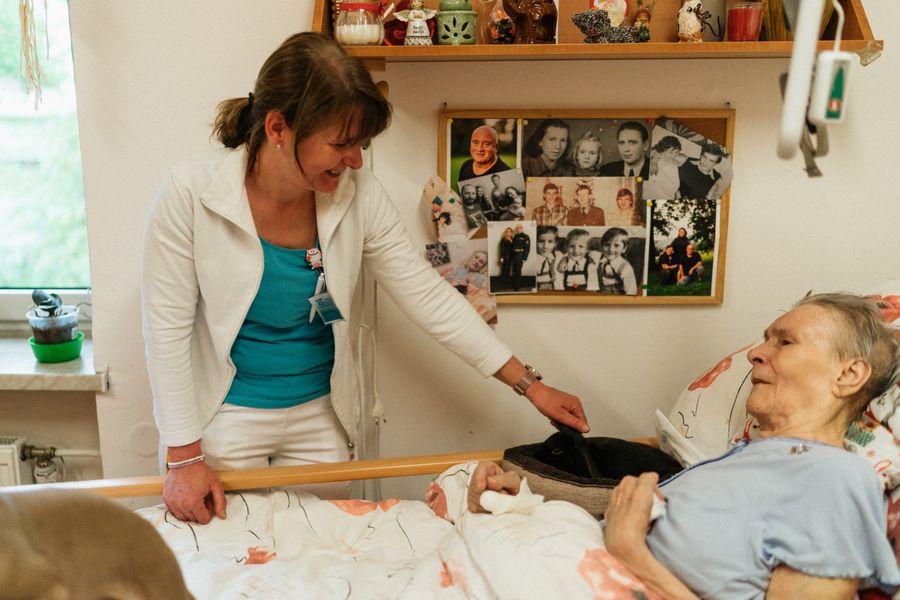
Day-to-day elder-care work involves personal hygiene assistance, mobility support, medication administration, meal assistance, and a significant amount of direct emotional engagement with residents, some of whom live with dementia or serious chronic conditions – genuinely rewarding for candidates who go in with realistic expectations, and genuinely difficult for those who do not.
Shift work, including nights and weekends on a rotating basis, is standard across nearly all care facility roles, and physical demands (lifting, standing for long periods, assisting with mobility) are real and consistent, not occasional – candidates evaluating this path honestly should weigh this alongside the strong pay and shortage-driven job security, not just the salary figures alone.
Why Germany Needs Caregivers So Badly
A rapidly ageing population is driving one of Germany’s most acute, structural labour shortages.
Germany’s demographic shift – a shrinking working-age population caring for a growing elderly one – is projected to leave the country short by roughly 500,000 caregivers by 2030, a shortage the domestic workforce alone cannot close. This structural gap is precisely why elder care, alongside nursing, remains one of the most consistently and genuinely sponsored occupation categories for international candidates, with real job security attached, not a temporary opening.
Costs to Budget For – and a Genuine Fraud Warning
Language training is the main real cost – be genuinely cautious of any agency charging large upfront placement fees.
German language courses (working toward B1/B2) are the largest real cost most candidates face, whether studied in India before departure or after arrival. Visa and document costs (application fee, certified translations, health insurance for the visa process) add a smaller, predictable cost on top.
A genuine warning worth taking seriously: legitimate Altenpflege training places are paid positions, not something that should require a large upfront placement fee to a recruiting agency – candidates should be genuinely cautious of any agency demanding large sums before a training contract is even signed, and should independently verify a recruiter’s track record and any training school’s accreditation before paying anything beyond standard, modest processing costs.
Caregiver vs General Nursing Ausbildung: Which Should You Choose
Both routes share the same 2020-reform training structure – the real difference is your eventual specialisation and daily work setting.
Both routes share the same core Pflegefachmann/-frau training structure since the 2020 reform, so choosing between them is really about which day-to-day work setting and patient population genuinely suits you, not about one route being objectively “better” than the other – see our nursing jobs guide for the hospital-track comparison in full.
Life After Qualification: Settlement and Family
A structured, genuinely realistic path toward permanent settlement, with family reunification available along the way.
Once you complete your Altenpflege qualification and move into employment under it, you convert to a standard skilled-worker residence permit tied to your qualification – and given the acute nationwide shortage, finding a genuine sponsoring employer at this stage is consistently one of the more reliable outcomes across Germany’s various skilled-migration routes. Permanent settlement (Niederlassungserlaubnis) becomes available after several years of qualifying employment, following the same general timeline as other skilled-worker routes.
Family reunification – bringing a spouse and children – is available under the standard rules once you hold a qualifying residence permit, making this a genuinely realistic long-term settlement path for candidates planning around family, not just an individual work placement.
Your Realistic Roadmap to B1 German
The longest genuine bottleneck in this entire process is language, not paperwork – plan it as a real, staged project.
Candidates who treat language learning as a background task fitted around other plans consistently take far longer to reach B1 than those who treat it as the primary project for several months – see our German language exam preparation guide for a deeper look at structuring this study effectively.
Start from A1 with structured, consistent classes
Whether through a local institute in India or online, 3-5 sessions a week consistently outperforms occasional longer sessions – build the habit early.
Reach A2 with daily active practice, not just classes
Add daily listening (German audio/podcasts pitched at your level) and speaking practice with a partner or tutor, not just grammar study.
Push through B1 with care-vocabulary immersion
Once general B1 is close, add care-specific vocabulary (medical terms, daily-care instructions, common resident interactions) – your training school or a preparatory course can point you to the right materials.
Take a recognised certificate exam (Goethe, telc or ÖSD)
A certified B1 result is what training providers and the visa application actually require – schedule the exam once mock tests consistently show you passing, not before.
Keep learning after arrival
Real fluency and comfort with regional accents and colleague/resident communication continues to develop on the job – B1 is your entry ticket, not your final destination.
Tax, Deductions and Real Take-Home Pay
Gross stipend figures are not what lands in your account – here is what actually gets deducted and what remains.
Net take-home rises each training year alongside the gross stipend, and jumps meaningfully once you qualify and move to a full Fachkraft salary, where standard German payroll deductions (income tax, full social security contributions) apply in the same way as for any other employee – still leaving a genuinely comfortable take-home relative to the cost of shared accommodation and living expenses outside Germany’s most expensive cities.
How to Choose a Genuine Training Provider or Agency
A few concrete checks separate a genuine training pathway from a questionable one – worth running through before signing anything.
Genuine Altenpflege training places exist precisely because of the structural shortage covered above – meaning legitimate pathways do not need to pressure candidates with urgency tactics or unusually large upfront fees to fill seats. Taking the time to verify a provider properly before committing money or time is one of the highest-value steps in this entire process.
The training school is a recognised Altenpflegeschule, verifiable independently rather than only through the agency’s own claims
The training contract (Ausbildungsvertrag) names a specific care facility and start date, not a vague future placement
Fees requested are modest and clearly itemised (language course, document processing) – not a large lump sum for job placement itself
The agency can name and connect you with past candidates it has genuinely placed, not just testimonials on its own website
Payment terms are staged against real milestones (visa approval, arrival), not fully upfront before anything is confirmed
The stipend and training terms quoted match the realistic ranges in this guide – a quote significantly below or suspiciously above market range is worth questioning
How Germany’s Elder-Care System Actually Works
Germany’s care-level (Pflegegrad) system and its mix of facility types shape exactly where and how you will work as a qualified caregiver.
Every care recipient in Germany is assessed and assigned a Pflegegrad (care level, 1 to 5) that determines how much support they receive and what services are funded – understanding this system matters because it shapes daily caseloads and the type of support you will actually provide, from light assistance for Pflegegrad 1-2 residents to intensive, near-constant care for Pflegegrad 4-5 residents.
You will typically work in one of three settings: stationary care homes (Pflegeheime, residential facilities where most newly qualified caregivers start), ambulant/home care services (Ambulante Pflegedienste, visiting clients in their own homes), or hospital-adjacent geriatric wards – each with a genuinely different daily rhythm, and many caregivers try more than one setting across their first few years to find the best fit.
A Realistic Shift, Start to Finish
What an early or late shift in a residential care home genuinely looks like, based on how these roles actually run.
Handover and care plan review
Each shift begins with a handover from the outgoing team, reviewing every resident’s current condition, medication schedule and any overnight changes.
Morning care and mobility support
Assisting residents with washing, dressing and mobility – physically demanding, and where the bulk of hands-on personal care happens.
Medication and medical documentation
Administering prescribed medication on schedule and documenting it precisely, since German care documentation standards are strict and legally significant.
Meals and social engagement
Supporting meal times and, meaningfully, spending real time talking with and engaging residents – a genuinely valued, not incidental, part of the role.
Afternoon activities or rest support
Depending on shift and facility, supporting group activities, physiotherapy sessions, or rest periods.
End-of-shift documentation and handover
Completing care records and briefing the incoming team – documentation quality is taken seriously and forms a real part of your professional accountability.
Where the Demand Is Strongest
Demand is nationwide, but rural and smaller-town facilities often offer faster placement and, sometimes, additional incentives.
While every German state faces caregiver shortages, rural regions and smaller towns – where younger domestic workers are more likely to have moved away to larger cities – often show the most acute local shortages, and some regional care-home operators offer additional incentives (accommodation support, faster onboarding, signing assistance) specifically to attract international trainees. Major cities offer more facility choice and stronger public transport, but frequently see more applicants per opening than smaller regions.
Choosing between a big-city placement and a smaller regional one is a genuine trade-off worth discussing directly with your training provider or counsellor, rather than defaulting to the most recognisable city name.
How Germany Compares to Other Popular Caregiver Destinations
Compared with Gulf-country or other caregiver-recruitment routes, Germany’s paid-training structure stands out.
This is not a claim that one destination is universally better – it genuinely depends on individual priorities – but candidates comparing options should weigh Germany’s combination of paid training, a portable recognised qualification, and a real settlement pathway against the faster but generally less structured routes common elsewhere.
Caregiver (Altenpflege) Ausbildung in Germany at a Glance
Common Mistakes Applicants Make
Frequently Asked Questions
A paid, 3-year dual vocational training programme (with a shorter 1-year assistant route also available) that qualifies you to work as a professional elder-care specialist in Germany.
Yes – trainees earn a monthly stipend starting around EUR 1,340-1,490 in Year 1, rising each training year, unlike unpaid academic study.
B1 minimum to begin, with B2 preferred especially for the full 3-year specialist track – language study should start well before applying.
Roughly EUR 2,800-3,200 per month starting out, rising to EUR 3,600-4,200 in supervisory roles and EUR 4,500-5,500+ in care management positions with experience.
Both share the same post-2020 training structure, but Altenpflege specialises in elder-care settings (care homes, home care) while general nursing focuses on hospital and clinical settings.
Class 12 pass holders can generally apply directly to the 3-year specialist route; the 1-year assistant route mainly suits Class 10 pass candidates or those who want to start earning and gaining experience sooner.
Yes, a genuine and acute one – Germany is projected to need roughly 500,000 additional caregivers by 2030 due to its ageing population, making this one of the most consistently sponsored occupation categories.
The Ausbildungsvisum under Section 16a of Germany’s residence law, a dedicated vocational-training visa category distinct from a student or standard work visa.
It is Germany’s official care-level rating (1-5) assigned to every care recipient, determining how much support they need – understanding it helps you know what kind of daily caseload to expect.
Both offer genuine demand – rural and smaller-town facilities often have more acute local shortages and sometimes extra incentives, while cities offer more facility choice and stronger transport links; it is a real trade-off worth discussing with your counsellor.
It depends on priorities, but Germany offers a genuinely structured, paid training pathway with a recognised qualification and a real route to permanent settlement and family reunification, which many Gulf-country routes do not offer in the same way.
Related Guides & Services
Talk to an Admission Germany Counsellor
Tell us your education level and current German, and we will give you an honest read on which caregiver training route fits you and how long it realistically takes.
Request Free Guidance
Share your details and a counsellor will call you back.
By submitting, you agree to be contacted by our counselling team.