
If you are exploring a career in woodworking or carpentry in Germany, you’ll come across three popular terms — Tischler, Schreiner, and Zimmermann.
At first glance, they might all seem to mean “carpenter,” but in Germany, each title refers to a different specialization, region, and type of work.
Understanding these differences is crucial for international students, especially those applying for an Ausbildung program in one of these professions.
🇩🇪 1. Tischler – The Furniture and Interior Carpenter
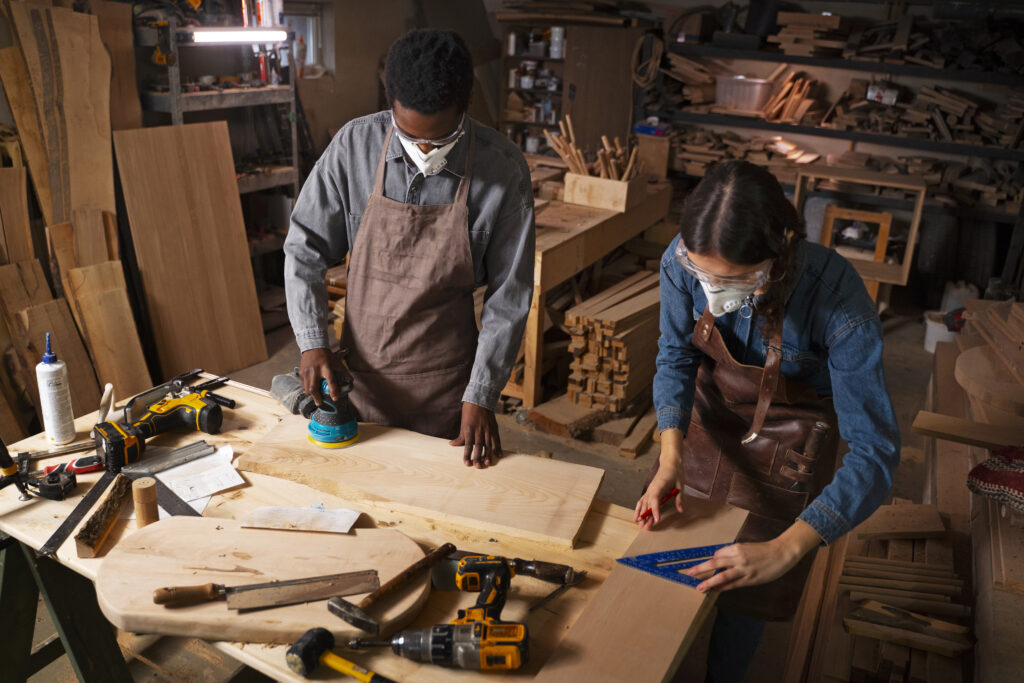
Tischler is the most commonly used term in northern and eastern Germany for what English speakers usually call a cabinetmaker or joiner.
A Tischler is a skilled craftsperson who designs, builds, and installs furniture and interior fittings such as:
- Cabinets, wardrobes, and drawers
- Doors, windows, and stairs
- Office furniture and wooden interiors
- Custom-made fittings for homes and commercial spaces
🧰 Key Skills of a Tischler
- Precision woodworking and joinery
- Understanding of wood materials and design
- Use of modern machines (CNC tools, sanding, and finishing equipment)
- Interior planning and measurement skills
🎓 Ausbildung as a Tischler
- Duration: 3 years
- Dual system: Practical training in a company + theory at a vocational school
- After completion: You can become a master craftsman (Tischlermeister) or start your own business
In short, a Tischler focuses on indoor wooden structures and furniture-making.
🪚 2. Schreiner – The Southern German Word for Tischler
Schreiner and Tischler are practically the same profession, but the word changes by region.
In southern Germany, especially in Bavaria and Baden-Württemberg, the term Schreiner is used instead of Tischler.
Both have the same training, skills, and responsibilities.
So if you’re applying for an Ausbildung and you see Schreiner instead of Tischler, don’t worry — it’s not a different trade.
📍 Example:
- In Hamburg or Berlin → “Tischler Ausbildung”
- In Munich or Stuttgart → “Schreiner Ausbildung”
🪑 Focus Areas:
- Building and restoring furniture
- Creating wood interiors for houses and offices
- Working with materials like wood, glass, or laminate
Essentially, Tischler = Schreiner, just different regional terminology.
🏗️ 3. Zimmermann – The Structural Carpenter or Framer
While Tischler and Schreiner work mainly indoors on furniture and interiors, a Zimmermann (or Zimmerer) is a carpenter who builds large wooden structures — like houses, roofs, and bridges.
A Zimmermann works more like a construction carpenter, specializing in timber framing and structural work.
⚒️ Typical Work of a Zimmermann:
- Building wooden houses, roof trusses, and balconies
- Repairing and restoring historical wooden buildings
- Working outdoors on construction sites
- Reading architectural blueprints
- Measuring and cutting beams for framework
🎓 Ausbildung as a Zimmermann
- Duration: 3 years
- Focus: Heavy-duty carpentry and structural work
- Physical work outdoors in all weather
- After Ausbildung, you can progress to become a Polier (foreman) or Zimmermeister (master carpenter)
So, a Zimmermann builds the skeleton and structure of buildings, while a Tischler/Schreiner handles interior and detailed woodwork.
🔍 Summary Table: The Key Differences
| Profession | Main Work Area | Focus | Work Environment | Common in Which Region | English Equivalent |
|---|---|---|---|---|---|
| Tischler | Interiors | Furniture, cabinets, fittings | Indoor workshops | North & East Germany | Cabinetmaker / Joiner |
| Schreiner | Interiors | Same as Tischler | Indoor workshops | South Germany | Cabinetmaker / Joiner |
| Zimmermann | Construction | Roofs, wooden frames, structures | Outdoor construction sites | All over Germany | Carpenter / Framer |
🧑🔧 Which Profession Should You Choose?
If you love creative design, precision work, and crafting furniture, then Tischler or Schreiner Ausbildung is ideal.
You’ll spend more time indoors, using tools and machines to create customized interiors.
But if you enjoy physical, outdoor work and large-scale building projects, then Zimmermann Ausbildung might be better.
It involves teamwork, construction sites, and the satisfaction of building entire wooden structures from the ground up.

🌍 Opportunities for International Students from India
All three of these professions — Tischler, Schreiner, and Zimmermann — are open to international students, including those from India.
You can apply for a German Ausbildung visa, provided you meet these basic requirements:
- Minimum Qualification: 12th grade or equivalent
- German Language Level: At least B1 (sometimes B2 preferred)
- Age Limit: Typically 18–30 years
- Motivation Letter & CV: Explaining why you want to pursue this trade
- Training Contract (Ausbildungsvertrag): From a German company
These professions are part of Germany’s skilled trades shortage list (Mangelberufe), meaning trained workers are in high demand, and foreign trainees are welcomed.
💼 Future Career Prospects
After completing your Ausbildung and gaining some experience, you’ll have several career paths:
- Work as a qualified tradesperson in Germany
- Continue to become a Master Craftsman (Meister) — allows you to open your own workshop
- Pursue further studies in wood technology or interior design
- Apply for permanent residency after a few years of work
Germany’s woodworking and construction sectors offer stable jobs, good salaries, and the opportunity to grow professionally in a well-respected trade.
💶 Average Salary Overview
| Experience Level | Tischler / Schreiner (€ per month) | Zimmermann (€ per month) |
|---|---|---|
| During Ausbildung | 800 – 1,200 | 850 – 1,300 |
| Entry-Level | 2,200 – 2,800 | 2,300 – 2,900 |
| Experienced Worker | 3,000 – 3,800 | 3,200 – 4,000 |
| Master Craftsman | 4,000+ | 4,200+ |
Note: Actual earnings vary by region, company, and experience.
🧭 Conclusion
In summary, the difference between Tischler, Schreiner, and Zimmermann lies in their specialization and work setting:
- Tischler and Schreiner create beautiful interiors and furniture.
- Zimmermann builds the wooden structures that hold buildings together.
For Indian students interested in working with wood, design, and craftsmanship, all three Ausbildung programs offer excellent opportunities to build a career in Germany’s growing skilled trades sector.
Choose the one that fits your interests, skills, and work style, learn the German language, and take the first step toward a rewarding career in Europe’s woodworking industry.